When it comes to interior design, the ceiling is often an overlooked aspect of the room. However, with the right texture and finish, a ceiling can add depth and character to a space. In this article, we will explore some of the best ceiling texture ideas to give your room a unique look and feel.
Personally, I’ve always been a fan of a textured ceiling design. I think they can add a unique and interesting element to a room, and they’re a great way to create a focal point or add depth and dimension to an otherwise plain space.
There are numerous ceiling texture types to choose from, ranging from classic popcorn to modern sleek finishes. With such a large variety of designs to choose from, it’s super easy to achieve the look you want.
Let’s take a look at how you can transform your home by using ceiling textures to create a different vibe in your home.

Popcorn Ceiling Texture
Popcorn ceilings are a classic option that has been popular for many years. Also known as acoustic, cottage cheese ceiling, artex or stomp ceiling texture, this was a popular choice in homes during the 1970s and 1980s.
You can recreate the texture by applying very thick paint with a paint roller, though you could use a large brush too. Just make sure you dab the brush vertically against the ceiling.
As it can be a messy and time consuming process, you may find the best option is to use a roller.
The key here is the paint, which should have a super thick consistency, think toothpaste, to help you achieve the perfect popcorn ceiling design.
This texture is great for hiding imperfections in the ceiling and helping to reduce noise in the room. However, this is one of the most difficult ceiling textures to clean and can easily attract dust and dirt over time if you do not clean it regularly.

Orange Peel Texture
The orange peel ceiling look is sometimes referred to as ‘splatter or eggshell texture’ this look can be used on living room walls as well as ceilings as it is easy to maintain.
As the design is easy to clean and is durable, it is one of the most popular options to use, especially in commercial building and rental properties.
To create the look, you will need to use something called a hopper spray gun, which is attached to an air compressor with your joint compound mixture. The trick with this is to keep the hopper constantly moving as it sprays a mixture of gypsum plaster mixed with a little water on your ceiling or walls.

Knockdown Ceiling Texture
Knockdown texture is one of the most popular ceiling texture options that gives the ceiling a slightly rough and bumpy appearance. This look is also known as skip trowel texture.
You can achieve this look by spraying a mixture of water and drywall compound (also know as joint compound) onto the ceiling. Then, use a trowel to smooth out the bumps and peaks.
The marble like texture left will be super easy to apply ceiling paint, maintain and is much easier to clean than popcorn texture. It isn’t very overwhelming either, so if you do not want your ceiling to be the focal point of a room, this really is an ideal choice.
Swirl Ceiling Texture
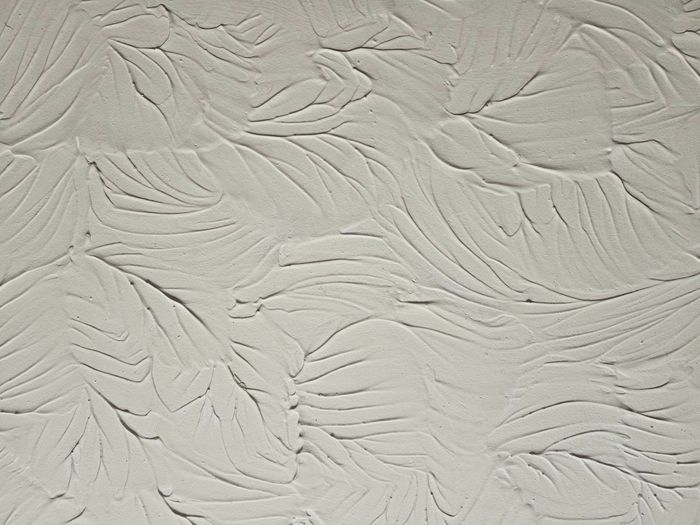
The swirl design is a beautiful, unique option that adds a touch of elegance to a room and you may have noticed it in older homes. It is made by using a trowel to create swirls in half circles, in wet drywall mud to create fan like swirls.
Use a stomp brush to achieve the look, by pressing down so the brush bristles to flatten them out and twist it to give a swirl look or pull away to give a more stiff, protuding feel.
It can be quite a challenge to get the swirls consistently right every time, so definitely practice this before hand. If you do not achieve the right look, simply let the compound dry – this will take a good few hours – and then sand down to restart. Try this look in smaller rooms to start with, before moving to a large area.
This is a great design for adding a subtle visual interest to any room and can be painted over easily. The swirls actually have health benefits too due to the calming effect of the design. So if you suffer with headaches or vertigo, this design is ideal for you.

Skip Trowel Ceiling Texture
Skip trowel (also known as fish scale ceiling texture or Santa Fe ceiling texture) is another great option that adds a subtle texture to the ceiling. It is achieved by using a trowel to apply drywall mud in a skipping motion. The great thing about the design is you do not need to be precise in order to achieve a asthetically pleasing look.
This particular look is popular due to its Mediterranean feel and is great for hiding imperfections in your ceiling. You can achieve this look by using a very small amount of drywall compound, then use a skipping motion when running a trowel or drywall knife over the wall in an irregular pattern.
You can create a thicker, more textured and coarse finish by adding sand to the compound. Brown sand will create a more mottled appearance, whereas white sand will give a smoother look. These are the most popular colours for a sand ceiling, though the choice is entirely down to personal preference.
If you work in smaller sections, this will help you to achieve a more uniform look, as opposed to working on a larger area. If you are adding sand, do not add too much as this can easily clump – it is recommended to use 1 part sand to 3 parts drywall mud.
Smooth Ceiling Texture
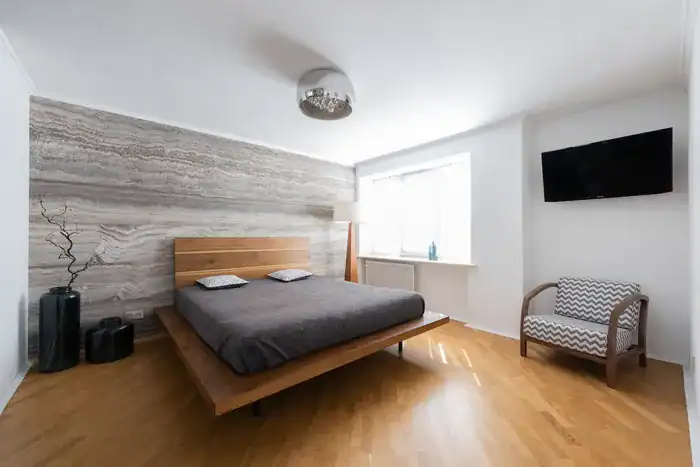
Smooth ceiling texture is a modern option that gives the ceiling a sleek and polished look. It is achieved by using a level 5 drywall finish, which involves multiple coats of drywall mud and sanding in between coats.
This flat surface finish is great for adding a modern touch to a room and is very easy to clean and paint over. It is worth noting that despite its sleek look, a smooth surface will actually pass more noise than a textured surface.
Preparation is key here to achieving a smooth surface, so make sure you smooth out any imperfections and ensure the wall is completely dry before starting.
You should apply layers of very thin drywall compound, letting each skim coat dry and sanding any minor imperfections, before starting the process again. Remember, very thin layer with either a trowel or drywall knife.
Oddly, this particular type of texture is one of the most difficult looks to achieve than other textures as it has to be so precise, so you maybe wise booking an experienced plasterer to create the perfect end result for you.

Lace Ceiling Texture
This particular design has a decorative finish that resembles a delicate lace pattern. You will find that is is a popular texture for ceilings in traditional and vintage-style homes.
Again, you will need a specialised tool known as a hopper gun to create this look, as you will spray a fine mist of drywall mud or joint compound in circular or figure of 8 motions onto the ceiling surface at a 45 degree angle. This will help to create a pattern of tiny peaks and valleys which will needed to be sanded down when dry.
Alternatively, you could flatten the texture with a trowel as you go along in, by moving in small areas as you do not need to achieve a specific pattern.
It really is a delicate option that helps to add a feminine touch to any room and the look requires a very steady hand and a lot of practice to achieve the desired effect. You need to adjust the hopper gun’s pressure and the consistency of your mixture in order to create a pattern that is not too heavy or too light.
Do not forget to wear protective gear, such as a decorater’s mask and goggles, as when using the hopper gun, you do not want the mixture going in your eyes, nor do you want to inhale any particles.

Stipple Ceiling Texture
Also known as slapbrush texture, you can achieve a stipple brush ceiling texture with a special brush and wet joint compound. The process creates a random design, making it a great way to hide any minor imperfections and flaws in your ceiling.
The slap brush ceiling technique requires mixture that should be thicker than normal paint and can be achieved either with a bursh and roller or a hopper gun.
It really does offer a classic look to any room, and will create hundreds of tiny shadows on your ceiling due to the irregular surface. This is probably a better design idea for a larger area as it can make smaller rooms feel even smaller as your focus will be drawn to the texture.

Rosebud Ceiling Texture
Adding a unique and eye-catching ceiling texture can really elevate the look and feel of your home, and one texture that’s been gaining popularity lately is the rosebud design.
This texture is known by its small, raised circular shapes that resemble rosebuds and it can add a touch of elegance and charm to any room and is very popular in the United States.
One of the main benefits of the rosebud look is that it’s a great way to hide minor imperfections in your ceiling. If you have cracks, dents, or other flaws in your ceiling, applying this texture can help to disguise them and create a more polished look.
It’s relatively easy to achieve this look, with the use of a stipple brush and hopper. Though, it really is such a pretty design, that it would be best to hire a professional plasterer to create this artistic look for your home.

Are Textured Ceilings Outdated?
It’s a question that many homeowners and interior designers have been wondering over for quite some time.
While some may argue that a adding texture to a ceiling is something of the past, others believe that they can still add a touch of character and charm to any room.
Ceilings with texture were very popular in the 1970s and 1980s. Often used as a way to hide imperfections in the ceiling surface, while changing the feel of a room.
The texture was typically created by applying a special compound, such as popcorn or stucco, to the ceiling surface. However, in recent years, the trend has shifted towards smooth texture, flat ceilings.
One of the reasons why ceilings that are textured are not as popular is because they can be difficult to maintain. Dust and debris tend to accumulate in the crevices and bumps of textured ceilings, making them difficult to clean.
You will quickly realise that repairing a ceiling that is textured can be a challenge. It can be tricky to match the texture and colour of the surrounding area, which will take extra effort to restore.
That being said, there are still some instances where a texture on a ceiling can work well. For example, if you’re looking to create a vintage or retro feel in a room, the ideas featured above can help to achieve that look.
Whether or not ceilings that are textured are outdated is largely a matter of personal preference. While they may not be as popular as they once were, they are still a viable option.
If you’re considering adding any of the ceiling texture types featured above in your home, it’s important to weigh the pros and cons and decide if it’s the right choice for you.

Wrapping Up The Best Ceiling Texture Ideas
Ceilings with texture help to add depth, character and a visual interest to any room. From popcorn ceiling to wood rosebud designs, there are many ceiling texture ideas to choose from, with their own benefits.
When you choose a ceiling texture, you really should consider the style and aesthetic of your home. As well as the function of the space as some designs featured above can make small rooms feel even smaller.
With the right texture, you can create a space that is both beautiful and enhances the look of your home.

Well I’ve learnt something today! I didn’t know that was called Popcorn texture! I think textured ceiling definitely still have their place – mainly in high ceiling rooms in traditional properties. They will never disappear!
Definitely agree, texture on the ceiling certainly adds a unique look to a room – love the fact it also helps reduce noise levels too!
Thank you for sharing your post at #SeniorSalonPitStop and welcome to the Linky. I have read, shared on SM